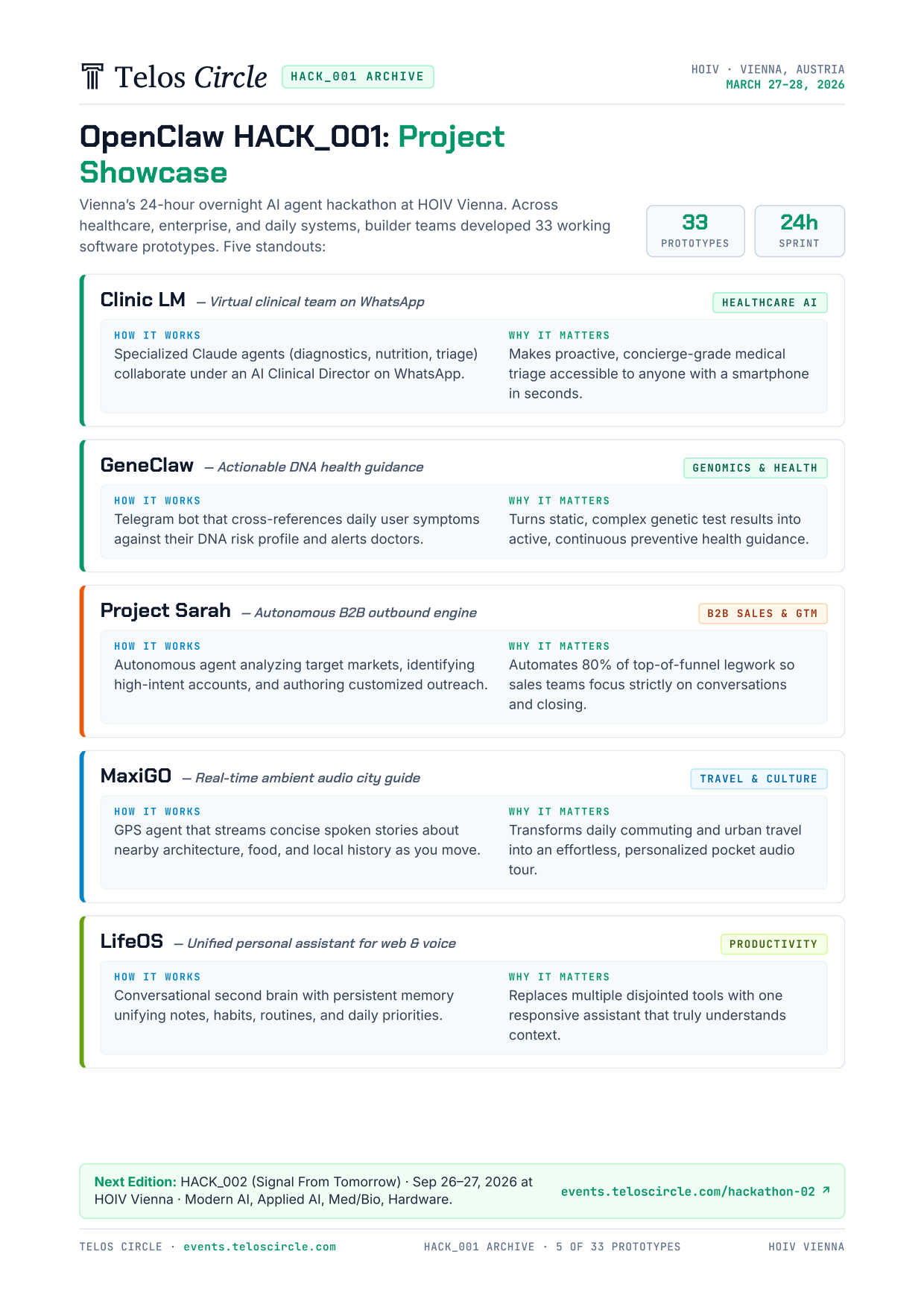
A1 / APPLIED AI FOR CONSUMERS
OneShotAndy
Pflegegeld-Prüfer
Overnight AI hackathon · Vienna · 26–27 September 2026
Thank you for being part of HACK_002.
EVENT IS OVER TELOS CIRCLE PRESENTS
Building the future we were promised.
Two blocks: A covers general AI and software; B focuses on science, especially biology and medicine. Each block has three tracks. The examples and resources are starting points, not requirements — teams may use other tools or datasets if they can explain access, licensing and evaluation.
BLOCK A / GENERAL AI & SOFTWARE
Build: a usable AI product for real users
Apps, websites, assistants, AI tutors, travel planners, new interfaces.
Build AI-powered apps, websites, assistants, consumer services, or new interfaces that people can use today.
OpenStreetMap Overpass (map data); OpenAI API quickstart (app guide).
Task completion on five cases, time or quality versus a simple baseline, and feedback from at least one intended user.
Build: a tool or workflow that improves how you or an organisation works
Internal assistants, reporting automation, research workflows, knowledge systems.
Improve how you, your team, company, lab, or institution works: automate repetitive work, connect tools, manage knowledge, or support decisions.
n8n first workflow (automation guide); OpenAI evals (evaluation guide). Use approved internal data or synthetic fixtures.
Time saved, error rate, and number of human corrections across at least five representative cases.
Build: a tool or infrastructure component for building AI systems
Codex/Jev tooling, local-model runtimes, agent infrastructure, evals, security tools, benchmarks.
Build tools for developers: experiment with Jev or Codex, run local models in new environments, improve security workflows, or strengthen agent infrastructure.
Jev quickstart; Codex SDK; Ollama API; OWASP GenAI Security.
On a fixed test repo or workload, report detection and false-positive rates, latency, cost, or resource use versus a baseline.
BLOCK B / SCIENCE, BIOLOGY & MEDICINE
Build: a tool, model, analysis, or hypothesis related to aging and healthspan
Biomarker analysis, aging clocks, biological data, literature mining.
Apply AI to aging, healthspan, biomarkers, biological data, literature, and research workflows.
CDC NHANES datasets; NCBI GEO DataSets.
Held-out error or an effect estimate with uncertainty; explain sampling, confounding, and why the result does not establish a treatment benefit.
Build: a simulation or experiment around neural and brain-inspired systems
Neural simulation, connectomics, spiking networks, in-silico nervous systems.
Explore brain-inspired computation through neural simulation, in-silico nervous systems, connectomics, and emergent behaviour.
Allen Brain Map (data and atlases); Brian2 tutorials (spiking-network simulator); repo: The-Uploading-Lab/fly-behavior-experiments.
Pattern recall, response delay, network stability, or another defined metric across a parameter sweep and baseline.
Build: a system that accelerates part of the scientific process
Scientific agents, hypothesis generation, experiment design, lab automation, automated analysis.
Accelerate science with knowledge synthesis, scientific agents, lab automation, experiment design, and automated analysis.
OpenAlex API (scholarly graph); NCBI E-utilities (PubMed access); Open Targets API (biomedical evidence).
Citation support, reviewer agreement, false positives, or time saved; a generated hypothesis is not a validated discovery.
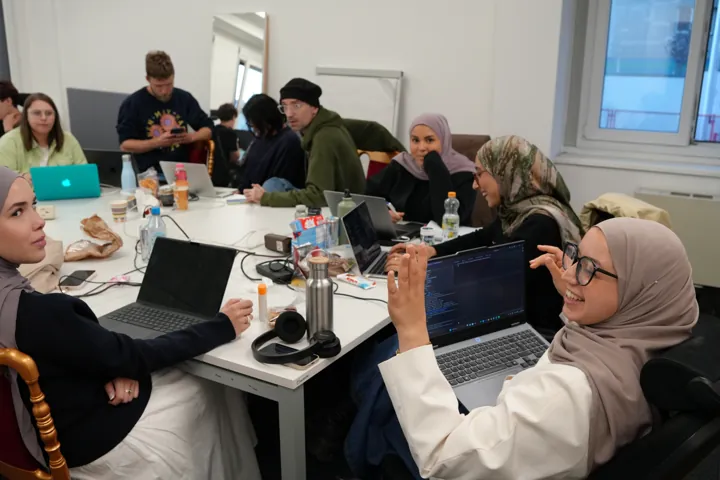
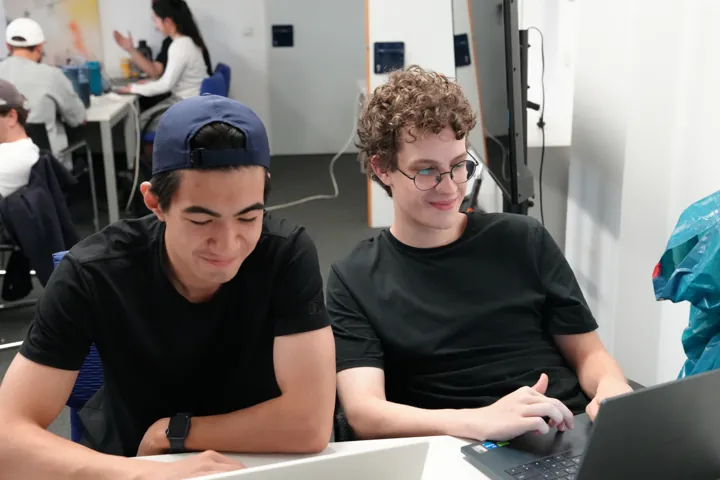
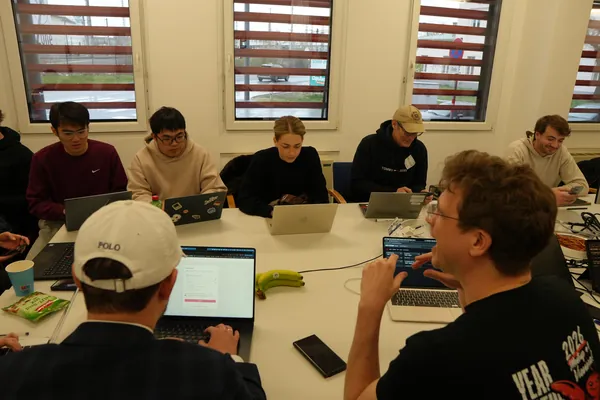
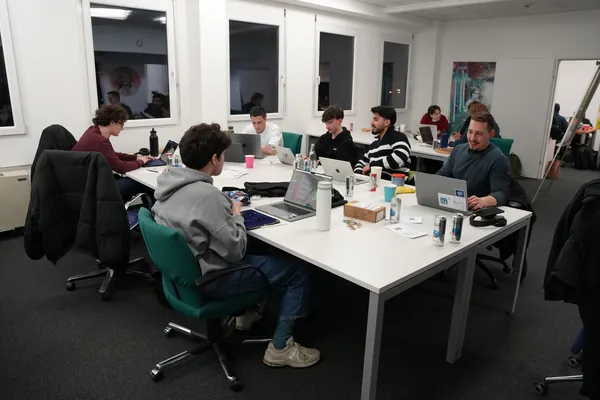
A hackathon is a focused build sprint: small teams turn an idea into a working prototype overnight. Research, design, domain knowledge, and clear problem framing matter just as much as programming.
Builders, researchers, designers, founders, students, hardware people, biotech specialists, and curious people who want to make something real. Apply solo or with a team.
Prizes and award categories will be announced at a later date.
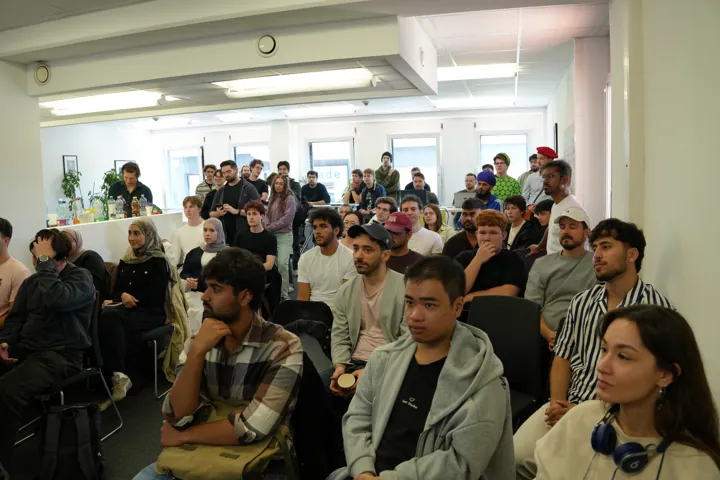
The in-person Day 0 takes place on Friday, 25 September, with a talk by Irene Fialka and the AI Primer. Register on Luma; you can also join just one block. The workshop materials are public online.
Irene Fialka, former CEO of INiTS, built one of Austria's leading startup incubators and now advises top corporations. Her talk, “A problem worth solving: how science is turned into innovation”, is followed by an Ask Me Anything on startups, founding and fundraising. Open to technical and non-technical people alike. On Saturday she mentors teams at the hackathon, free of charge.
Join Peter from Machine Literacy for an AI crash course and hackathon onboarding: modern AI workflows, agentic coding, hackathon ideation, hacker culture, and where AI is heading next. Aimed mainly at non-technical participants and newcomers; everyone is welcome. Dinner break at Hofer next door.
All times are Vienna time (CEST, UTC+2). Build window: Saturday 13:00 to Sunday 08:30 — 19 hours 30 minutes.

VIENNA / NONPROFIT / STARTUPS & RESEARCH
Telos Circle brings builders, researchers, and founders together around ideas worth pursuing. Events create the spark; a committed network helps turn them into projects, companies, and lasting collaborations.
Arsenalstraße 11, 1030 Vienna. A 4,500 m² innovation hub — coworking floors, studios and creative space. Open through the night for the full build window.
The community channel for accepted participants: team-finding, updates, sleeping arrangements, and on-the-ground coordination.
Upload your demo video and Git repo through our Google Form.
Judge
Judge
Judge
Judge
Judge
Judge
Judge
Judge
Judge
Judge
Judge